
What Are The 7 Steps Of Using An AED?
2025 Nov 20th
Automated external defibrillators (AEDs) are life-saving devices that aim at resuscitation of a normal heart rhythm in the event of sudden cardiac arrest. Without a doubt, knowing how to operate an AED correctly in critical cases can turn the situation around from death to life. It is reported that in Canada, lethal cardiac cases get the necessary intervention through AED devices located in various places such as schools, offices, community centers, and public spaces, resulting in a thousand saved lives annually.
However, simply having one in the vicinity is not enough; the people must know the seven clear steps involved in using an AED. At the Shock Shop, every Canadian should have the confidence to use this device without any problem.
Here we have summarized the seven safety steps that will help you to act appropriately and swiftly during an emergency.
Step 1: Check the Scene and Call for Help
It is no less important to ensure that the place is safe for the victim and, of course, for you before doing anything else. Before approaching them, look for danger such as fire, traffic, or an electrical wire that might hurt the victim.
- Check the person’s response by tapping and shouting.
- Immediately, call 911 if the person is not responding and not breathing normally.
- Moreover, if there are other people around you, point to one of them specifically and ask him to call EMS while you get an AED.
The faster you get professional help on the way while preparing the defibrillator, the better the chances of the victim's survival will be.
Step 2: Turn On the AED
The recent AEDs are made for easy handling. Once the device is at hand:
- Do it without any delay, open the case, and turn on the power.
- The situation will vary with each device, as the AED may automatically turn on when opened or require a specific button press.
- The AED will start providing you with clear voice prompts, and in some gadgets, also visuals.
Most of the AEDs used in Canadian communities are bilingual models, which provide instructions in either English or French, making them accessible all over the country.
Step 3: Expose the Chest and Apply Pads
The chest of the person has to be fully open for the AED to perform its function.
Remove the clothes covering the chest area quickly.
Be careful while drying the chest, so there is no moisture left that can interfere with the contact between the pad and the skin. Excess moisture can cause the device to malfunction.
These patches connect the person to the AED, which is the method of providing a quick and accurate shock that allows the machine to measure the heart rhythm correctly.
Step 4: Stand Clear While AED Analyzes
After the pads have been applied, the AED will start to analyze the person's heart rhythm.
The machine will voice the command "stand clear" to you and those around you. Make sure that no one who is in contact with the victim touches him.
This stage is crucial because touching the victim during the device process can cause incorrect readings, delaying the correct treatment.
Step 5: Deliver the Shock if Advised
If an AED shock is necessary, the device will command you to act.
- Ensure no one is close to the victim.
- When indicated, push the flashing shock button.
- Some AEDs can release the shock automatically without any action from your side.
The shock is a quick and controlled one that will help the heart restart its rhythm. And most importantly, AEDs are safe—they will not allow a shock unless necessary.
Step 6: Perform CPR
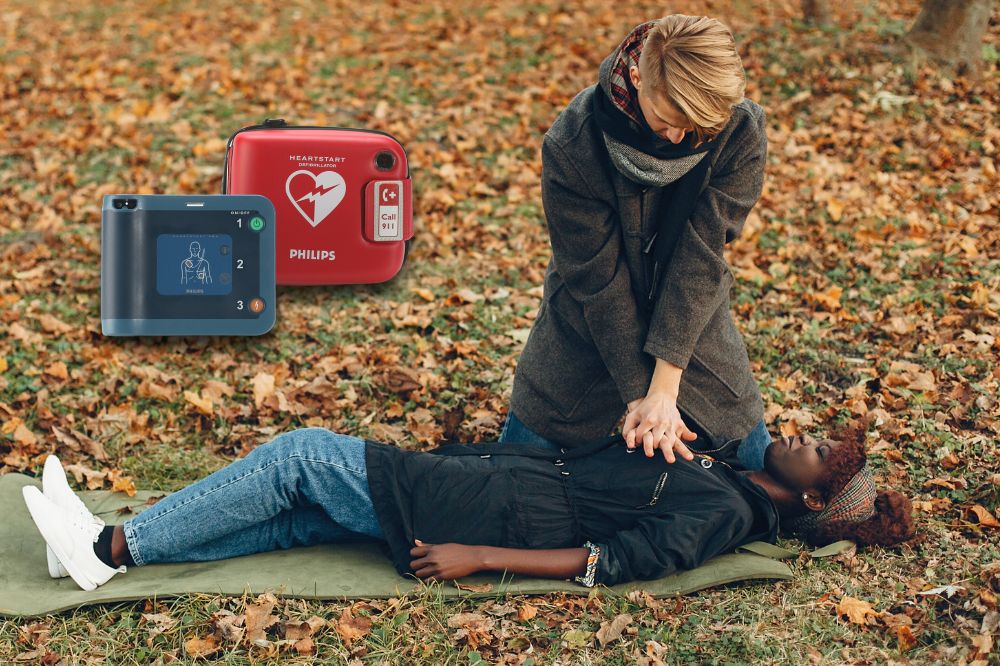
- Chest compressions should be done at a rate of 100–120 per minute. The recommended method involves pressing firmly and quickly in the middle of the chest, then letting it down fully after each compression.
- If you are skilled, do rescue breaths at a ratio of 30 compressions to 2 breaths. If you are not trained, please do not stop hands-only CPR.
- The AED will let you know when you should stop so it can recheck the rhythm.
- CPR performed together with an AED in Canada was very effective in saving lives in cases of cardiac arrest outside the hospital.
Step 7: Continue Care Until Help Arrives
The process in the AED will keep going: analyzing, guiding you, and following your instructions while you perform CPR.
Pads should not be taken off even if the person becomes conscious. AEDs medical professionals will do the removal.
While a professional arrives, provide details about the incident, including the type of shocks administered and whether the CPR was performed.
Conclusion
Sudden cardiac arrest is still something that can happen anytime, without even a hint of warning. But with the proper training and knowledge, any one of us could become a lifesaver. The Shock Shop is the leading distributor of technologically advanced solutions for AEDs medical. It is an essential point from where we can obtain instruments and educational resources to have a safer community, safer workplaces, and public places all over Canada.