
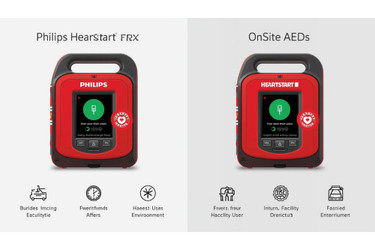
Philips HeartStart FRx vs. OnSite: Which AED Should You Choose for Your Facility?
2026 Feb 26th
Picking one of two nearly identical automated external defibrillators usually depends on surroundings, not just how well they work. Though made by the same company, using the same base tech, meeting strict health rules, the Philips HeartStart FRX AED and OnSite differ quietly in build quality. Where a device lives matters - a school field drenched in rain or a dusty factory floor tests toughness more than labels do. One might handle rough weather better; another could falter when dropped near water. Conditions tilt the balance, even if specs look alike. Tough spots need gear that won't quit in the middle of a crisis. Performance stays the same, but survival in daily wear isn't guaranteed. Location shapes what lasts.
Longevity hides in material choices few notice at first glance. Cold metal, thick casing, sealed buttons - small things decide big outcomes. Even trusted names adapt differently to chaos.
Why the HeartStart FRx Excels Outdoors
Out in the real world, the HeartStart FRx stands up to rough conditions. Rated IP55, it keeps out dust while handling light streams of water from every angle. Think beyond accidental drops in puddles. Places cleaned with soaked mops or spray hoses create damp air that eventually sneaks into devices. Regular AED cases rarely plan for that kind of wetness. This one expects it. A tough yellow shell holds a switch called Lock-Out-Mode, something the OnSite lacks. When flipped, it silences spoken cues mid-training - useful when instructors need quiet focus. Wires stay hooked up, battery power keeps flowing. Fewer plugging and unplugging sessions mean less strain on ports—fewer mishaps with settings getting wiped by mistake.
Office-Friendly Design: Where the OnSite Fits Best
One thing stands out when you look at the OnSite next to the FRx. Aimed at homes and offices, it doesn't have heavy-duty casing or tight weatherproofing. The outer layer—white with blue trim—feels more like a hospital gadget than something built for tough jobs—same shock output on both, climbing to 200 joules, same spoken steps guiding each rescue attempt. Yet only the FRx proved itself under harsh conditions. Emergency crews tell of pulling them from flooded rivers during rescues, digging them out of debris after quakes, and finding them working after being buried in snow from sledding accidents far north - all because internal parts stay locked away, safe from moisture, and metal bits resist rust even when soaked. That kind of resilience shows where design choices really matter.
Temperature Tolerance: Cold Environments Change the Equation
Cold handling varies between models. While the FRx keeps working from minus twenty Celsius up to fifty, down to negative four Fahrenheit, through 122 spots like drafty warehouses, open-air ramps, or beachside outposts that depend on that stretch. The OnSite cuts in only above zero degrees C, which is thirty two F, so icy rooms push its edge. Ice alone won't kill it fast, yet moisture forming during thaw cycles can spark misleading error signals - an often-overlooked reason for extra repair visits.
Battery Management and Pediatric Use: Small Differences, Big Impact
Four years - that's how long either device lasts on standby, more or less. While the FRx tracks battery expiry on its own using built-in smarts, the OnSite requires someone to enter the date. Skip it, and warnings lose their timing. Guidance during rescue steps comes standard in both. Yet only the FRx changes its CPR prompts and shock level when a pediatric key goes in. The OnSite can't do that without extra parts; kids' safety depends on buying special pads ahead of time - a detail some places forget.
Upfront Cost vs Long-Term Spend
Fifty bucks here, a few hundred more there - the FRx asks for more at first glance. Over time, though, what you spend changes shape. Less swapping out gear wrecked by the weather helps. Upgrades stretch farther apart when the housing holds up. Accessories multiply more slowly, cutting clutter and costs alike. Hidden math like this slips past most who buy in bulk. Cities swapping dead AEDs in public greens learned fast - tossing cheap units left outside added up quickly.
Military Approval and Long-Term Storage Reliability
Out in the field, labels differ, too. Noticing NSN tags on an FRx? That means it's made it into military logistics networks. Though ordinary shoppers might overlook this, it points to more rigorous quality checks than the gear they regularly encounter. Even old units dug up after years in storage still worked fine - thanks to tight seals and a dependable gel mix inside the pads.
What Longevity Really Means in Cardiac Emergencies
What really matters isn't which gadget revives a heart more effectively - both perform that task just the same - but how long they last while sitting idle. A unit's lifespan weighs just as heavily as its accuracy when lives are on the line.
Where to Find the Right Setup
Over at Shock Shop, you'll find the Philips HeartStart FRX AED, alongside care packs and tough-duty mounts built for rough spots. While some stores skimp on gear, this one stocks what holds up when it matters most. Need a full setup? They've got the pieces that match real-world conditions. From prep to placement, everything lines up without extra fuss.