
How AEDs Work: A Deep Dive into Cardiac Science and Life-Saving Technology
2026 Oct 16th
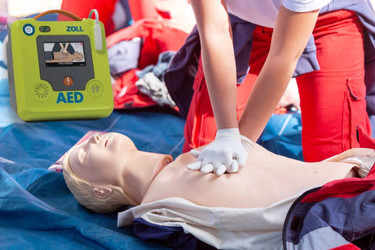
Sudden cardiac arrest doesn’t warn you before it arrives. It can occur in the middle of a hockey game, in the backyard, around the kitchen table, and at a family party - without a whisper of a hint of warning. When the electrical impulses of the heart become stuck, it can fall into a rapid, erratic rhythm, and the blood will stop pumping - and it’s dead in minutes. A thorough grasp of the cardiac science involved in automated external defibrillators can make the difference in saving a life - every minute counts.
The Electrical System Behind Every Heartbeat
If you want to know how an AED works, first you’ve got to know what it’s trying to fix. When a person has a healthy heart rhythm, the heart’s electrical activity starts in a tiny group of cells known as the sinoatrial node. Electrical impulses spread across the heart in a predetermined pattern, causing contraction in the two upper heart chambers followed by the two lower chambers, generating a normal heartbeat.
Cardiac arrest abruptly happens when that electrical system spirals into a very dangerous rhythm known as ventricular fibrillation. The heart's lower chambers beat in a mindless, random pattern, making the heart no longer pump blood, yet the heart's still technically "happily" munching away with electrical activity. A second rhythm - a deadly one - that can do the same thing is called pulseless ventricular tachycardia, where the heart beats so fast and so irregularly that it cannot possibly pump blood. In both cases, the patient drops, passes out, and stops breathing - all within seconds.
What an AED Actually Does
That’s where defibrillation comes into play. The AED doesn’t so much jump-start a heart like the superhero actions seen on TV. Rather, it reads the heart’s electrical rhythm via pads on the chest, then evaluates the rhythm to decide if it qualifies as “shockable,” a type of wild rhythm like ventricular fibrillation that can be fixed with a controlled zap of electricity.
When a shockable rhythm is found, the AED sends a precisely measured electrical impulse that briefly interrupts the chaotic electrical activity of the heart, in effect hitting a “reset button.” This pause in the electrical activity allows the heart’s pacemaker, the sinoatrial (SA) node, to restore and maintain a regular rhythm and beat on its own. The AED will not administer a shock in the event of a non-shockable rhythm, such as when the heart has flatlined, and instead will tell the rescuer to continue CPR.
This built-in rhythm evaluation is probably the most crucial safety function contained in modern AEDs. It takes the guessing out of the method. At a 3rd social gathering, a customer, with no coaching, will not need to diagnose the situation, and no coaching is required.
Why Every Minute Counts
“Cardiac science has established a very clear and predictable relationship between response time and survival rates from sudden cardiac arrest: a six to ten percent decrease in survivability every minute without defibrillation. Simply put, after ten minutes of waiting, it is exceedingly unlikely anyone will survive. The trouble is, even fully staffed urban EMS systems usually can’t make it within that same critical time window. This is precisely why responsible public access to automated external defibrillation—in a public or commercial setting or in private homes and families—makes an immediate difference.
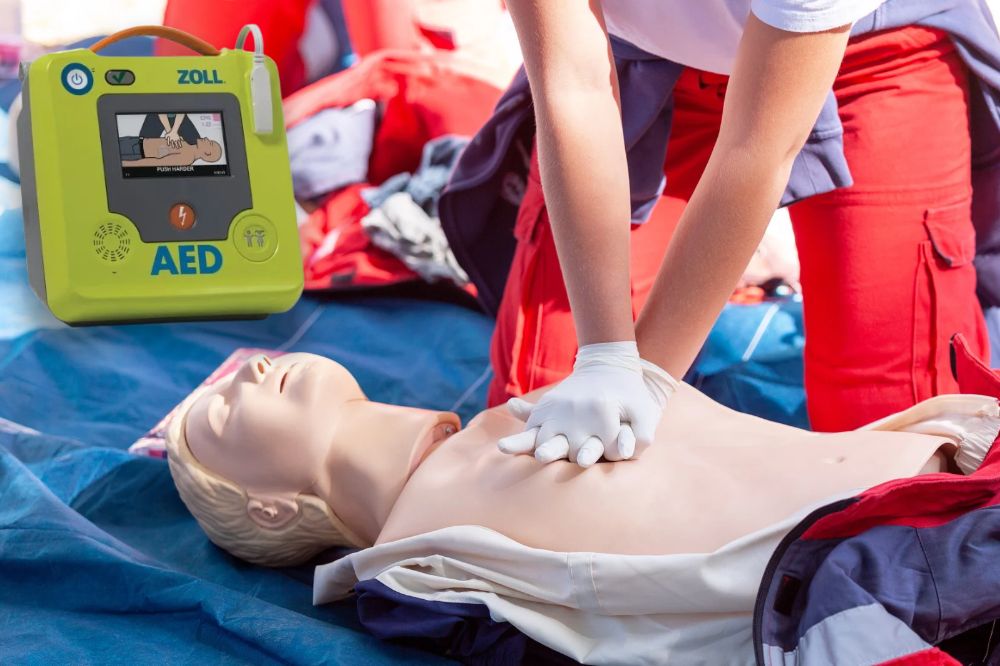
Also, when used in conjunction with rapid, high-quality CPR, an AED in the initial couple of minutes after sudden cardiac arrest occurs can greatly improve survival rates. Not only does CPR provide oxygenated blood to be pumped to the brain and other important organs, but it also provides them some time while the AED evaluates their rhythm and shocks them if needed.
Designed for the Moment It Matters Most
Today’s AEDs are designed specifically with the assumption that the victim handler will probably be in the midst of their first cardiac emergency and that it will be a very tense affair. That’s why today’s AED technology relies on user-friendliness and simplicity rather than complexity. We’ve eliminated doubt by providing easy-to-understand voice instructions, diagrams for pad placement, and automated rhythm analysis.
It doesn’t matter if you are in a hockey arena in Ontario, a workplace in Alberta, or a family home anywhere in Canada: the same cardiac science applies. It’s access to equipment and knowledge that varies. Whether you’re in the middle of a Canadian winter, a remote community, or even just hundreds of kilometres from the nearest hospital, having a defibrillator on hand makes all the difference.
Choosing the Right AED for a Home or Community Space
Not all AEDs are created equal, and knowing the AED cardiac science behind them makes it easier to see why some of the features are more important depending on where you are. For example, an AED intended for use at home may be made even easier to operate since you might be responding to an emergency as a spouse, parent, or neighbour with zero clinical training. Battery readiness, pad shelf life, and step-by-step audio instructions are just as crucial as the defibrillation technology itself, since a confusing or poorly maintained device may not work when you need it the most.
Shock Shop collaborates with families and groups in Canada to bring home preparedness within reach, enabling them to select a home-ready AED that fits their family, learn its operation, and be assured that they would know what to do in those crucial seconds.